
SENIOR CARE · CRANBERRY TOWNSHIP, PA
Swelling in the Heat: Why It Happens More Often After 60
Every summer we see it: rings that fit fine in the morning, shoes that feel tight by afternoon, ankles that look different by dinner.
Heat-related swelling in seniors occurs when aging circulation, common medications, and reduced kidney efficiency make it harder for the body to return fluid from the extremities. At Zock Family Chiropractic in Cranberry Township, Dr. Lauren Helf, DC, MS Clinical Nutrition, addresses the dietary and metabolic factors that make summer swelling worse — alongside the musculoskeletal care that keeps seniors active and independent.
By Dr. Lauren Helf, DC · June 2026
Every summer, we start seeing a pattern in the office. A patient in their late 60s or 70s comes in and, almost as an aside states that their rings have been tighter lately. Her shoes feel different in the afternoon. Their ankles look puffy by the time they sit down to dinner. They’re not alarmed — it happens every year — but this year it seems worse.
That pattern is real, and it’s not random. Heat-related swelling hits seniors harder than younger adults, and the reasons are specific enough that understanding them actually changes what you do about it.
What patients notice first
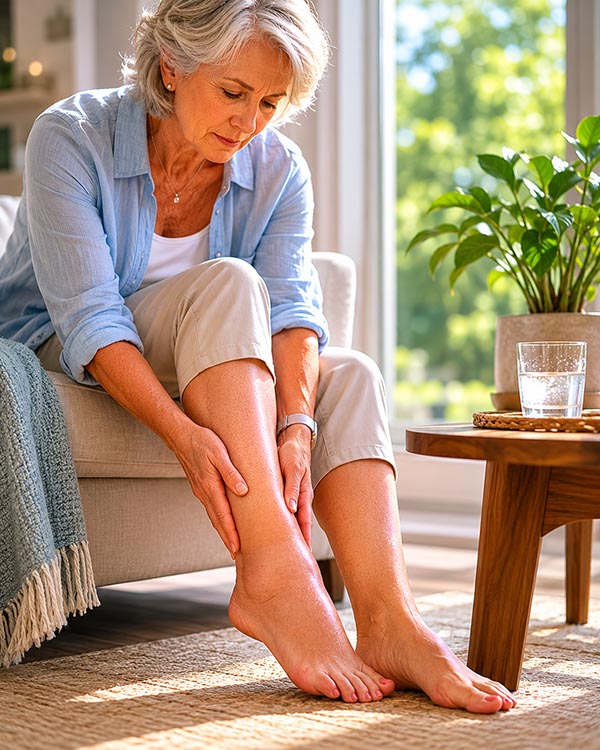
It usually starts small. Rings that fit fine in the morning. Shoes that feel snug by 3pm. A feeling of heavinesss in the lower legs after an afternoon outside. Some patients notice it more after a car ride or a day of sitting. Others notice it after being on their feet.
Often, what they’re experiencing is heat edema — fluid pooling in the extremities when the body has trouble returning it to the heart efficiently. For younger patients, this tends to be mild and clears overnight. In seniors, it can take longer, happen more easily, and feel more pronounced.
Why does it hit harder after 60
A few things change as we age that make heat-related swelling more likely. Circulation becomes less efficient at responding to heat stress. When your body heats up, blood is redirected toward the skin to cool you down, which means less is moving through the deep veins that return fluid from your legs. A younger cardiovascular system compensates quickly. An older one takes longer.
Kidney function naturally declines with age, which means the body is slower to remove extra fluid. Swelling that would clear within hours in a 35-year-old may persist for a day or two in a 70-year-old.
And here’s the one most patients don’t connect: medication. Calcium channel blockers — among the most commonly prescribed blood pressure medications — cause fluid retention as a known side effect. So do certain antidepressants, corticosteroids, and some hormone therapies. If you’re on any of these and your summer swelling has gotten worse in recent years, the medication may be amplifying something that’s already happening. That’s not a reason to stop taking it — it’s a reason to mention it to your prescribing doctor and to us.
The sodium piece
This is where my nutrition background comes in. Dietary sodium is one of the most direct drivers of fluid retention, and it’s one of the most underestimated. Most patients think of table salt when they think of sodium, but the bigger sources in most American diets are processed foods, canned soups, deli meats, and — this surprises people — bread.
When salt intake is consistently high, the body retains water to dilute the excess sodium. For a senior whose kidneys are already working harder to manage fluid balance, that retention is more pronounced and lasts longer.
I don’t take a one-size approach to this. Some patients need a significant dietary change. Others need a small adjustment. What I look for is the pattern — when they swell, what they ate, what medications they’re on, how hydrated they tend to be — and work from there.
What actually helps
For one thing, elevation works. Legs above heart level for 20–30 minutes genuinely moves fluid back where it belongs. This is not complicated advice, but it is consistently underused.
Movement helps more than rest for most patients. Brief walks — especially in the morning before the heat builds — activate the calf muscle pump, which returns blood to the heart. Standing still or sitting for long periods does the opposite.
Compression stockings help if they’re properly fitted. Not drug-store socks — graduated compression stockings. If your swelling is primarily in the ankles and lower legs, this is worth trying.
Hydration is counterintuitive but important. Dehydration concentrates sodium and triggers more retention. Drinking enough water — actual water, not just beverages — supports the kidneys’ ability to remove extra fluid.
When to call your doctor
One-sided swelling accompanied by sudden onset, pain, redness, or warmth in the swollen area requires medical evaluation that day. That presentation may indicate deep vein thrombosis, a medical emergency. Heat edema is bilateral, gradual, and improves with elevation. If yours doesn’t conform to that pattern, call your physician before calling us.
How Dr. Zock and I approach this
When a senior patient comes in and brings up swelling, we don’t treat it as a separate problem from whatever else they’re managing. We ask about their medications, their diet, their activity level, and how long it’s been happening.
For some patients, the conversation stays in the nutrition lane — dietary changes, sometimes targeted supplementation to support circulation and reduce inflammatory load. For others, it connects directly to their musculoskeletal care — because swelling in the legs changes how someone walks, which changes how their back and hips load, which is often why they came in to begin with.
That’s the integrative approach in practice. Not every problem is a chiropractic problem. But most problems in seniors don’t exist in isolation, and we treat the whole picture.
If summer heat has been making your swelling worse this year, it’s worth a conversation. New patients welcome — no referral needed.