
Nutrition & Wellness · Cranberry Township, PA
L-Theanine and Anxiety – What Does the Research Actually Say?
A tea-derived amino acid with some genuinely interesting evidence — and a lot of overstated claims. Here’s an honest, nutrition-informed look.
L-theanine is an amino acid found mainly in tea, studied for possible effects on stress, relaxation, attention, and sleep. But current evidence doesn’t support presenting it as a proven treatment for anxiety or any psychiatric condition. Dr. Lauren Helf — a chiropractor with a master’s in clinical nutrition — walks through what the research shows, what it doesn’t, and where nutrition ends and mental-health care begins.
By Dr. Lauren Helf, DC · Updated August 2026
Can L-theanine help with anxiety? It’s a fair question, and the honest answer is more nuanced than most supplement labels suggest. Some research hints that L-theanine may influence stress or relaxation, but the evidence that it treats clinical anxiety is limited and inconsistent. So rather than sell you on it, I want to walk through what we actually know.
I’m Dr. Lauren Helf. Alongside my Doctor of Chiropractic degree, I hold a master’s in clinical nutrition and a bachelor’s in sports and exercise science, so I tend to look at supplements through a nutritional, whole-person lens — not a psychiatric one. That perspective matters here, because L-theanine is a topic where the marketing has gotten well ahead of the science.
What Is L-Theanine?
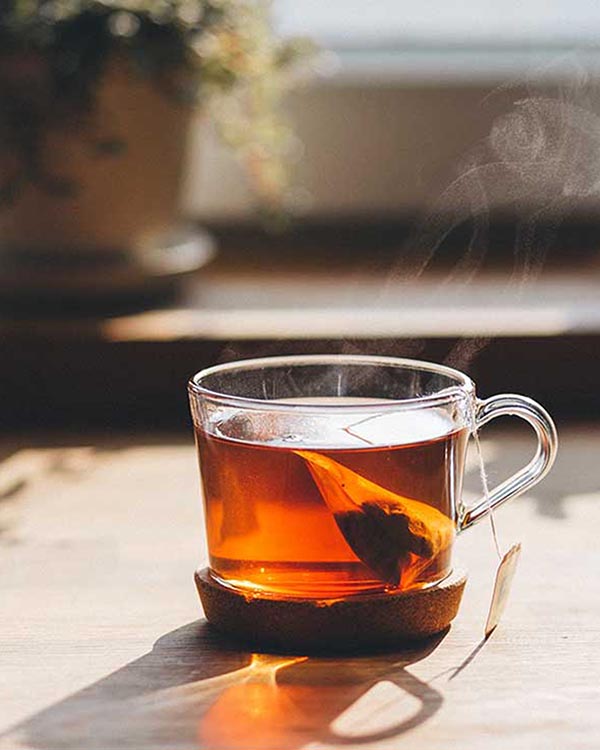
L-theanine is an amino acid that occurs naturally, primarily in tea leaves — both green and black tea. It’s part of what gives tea its character, and it’s the reason tea has been studied for its calming reputation.
There’s an important distinction to make right away: drinking a cup of tea is not the same as taking a concentrated L-theanine supplement. Tea delivers a modest amount of L-theanine along with other compounds, including caffeine. Supplements provide it in a far more concentrated form. Research has investigated possible effects related to relaxation, stress response, attention, and sleep — but “investigated” is the key word, and speculative mechanisms shouldn’t be treated as settled clinical facts.
Does L-Theanine Actually Help Anxiety?
This is the heart of the question, so let’s look at the weight of the evidence rather than any single study. Earlier and smaller studies were promising — a 2020 systematic review of human clinical trials found that doses around 200–400 mg per day might help reduce stress and anxiety in people facing stressful conditions, while explicitly noting that larger, longer studies were needed. (I share that as research context, not a dosing recommendation.)
Newer evidence tempers that optimism. A 2026 systematic review and meta-analysis covering 31 randomized trials and 1,168 participants found that effects on anxiety were inconsistent and generally not statistically significant, even though L-theanine showed some potentially interesting signals in other areas. A 2024 systematic review of L-theanine in people with mental-health conditions likewise reported some potentially favorable results but plainly called for further study. The takeaway is straightforward: L-theanine should not be described as a proven treatment for an anxiety disorder.
Stress and Anxiety Aren’t Necessarily the Same Research Question
Here’s a distinction that gets blurred constantly. Feeling temporarily stressed before a big presentation, a hard workday, an athletic competition, or after a poor night’s sleep is not the same as living with generalized anxiety disorder, panic disorder, or another diagnosed mental-health condition.
A good deal of L-theanine research concerns short-term stress responses in otherwise healthy people. That’s genuinely interesting — but it’s not evidence that L-theanine treats a psychiatric illness. Converting “may blunt acute stress in a lab setting” into “treats anxiety” is precisely where a lot of writing on this topic goes wrong, and I don’t want to do that to you.
What About Social Anxiety and Panic Attacks?
People search for this specifically, so let me be clear: there isn’t strong enough clinical evidence to recommend L-theanine as a treatment for social anxiety disorder or panic disorder. Extrapolating from general stress studies to these conditions isn’t justified.
If you’re experiencing persistent anxiety, recurrent panic attacks, low mood, or symptoms that are interfering with your everyday life, those deserve a conversation with an appropriately qualified healthcare professional. That’s not meant to alarm you — it’s simply where real help lives for those conditions.
L-Theanine, Caffeine, and Focus
Part of what makes tea interesting is that L-theanine and caffeine naturally occur together. Research has examined that combination especially for attention and cognitive performance, and the same 2026 meta-analysis found evidence of short-term improvement in choice reaction time with L-theanine, even as the broader literature stays mixed depending on the outcome measured.
Worth underlining: evidence about focus and attention is not evidence about treating anxiety. They’re different questions, and a benefit in one doesn’t transfer to the other.
Can L-Theanine Help With Sleep?
Stress, sleep, and recovery are connected, so it’s a reasonable thing to wonder about. Some research has studied L-theanine in the context of relaxation and sleep quality, and results suggest it may play a role for some people — but I’d stop short of saying it “improves sleep” or “treats insomnia,” because the evidence doesn’t support that certainty. As someone focused on recovery, nutrition, and movement, I see sleep as one piece of a much bigger picture, rarely solved by a single supplement.
Is L-Theanine Safe?
Again, separate tea from supplements. Tea provides dietary L-theanine alongside other compounds, including caffeine. Supplement products provide more concentrated amounts. In the studies available, L-theanine appears generally well tolerated — but “natural” doesn’t automatically mean appropriate for everyone.
Memorial Sloan Kettering recommends discussing supplemental L-theanine with a healthcare provider, noting that supplements are more concentrated than tea, that it may interact with sedating medications, and that caution is warranted during pregnancy and breastfeeding. That’s sensible guidance. What I won’t do is compare L-theanine favorably to prescription medication or suggest anyone reduce, replace, or stop a medication they’ve been prescribed — those are decisions for you and your prescribing clinician.
Can L-Theanine Cause Anxiety?
This one gets asked a lot, and the useful answer isn’t a flat “no.” If you’re drinking green or black tea, or taking a combination supplement, you may also be getting caffeine — and caffeine can affect some people’s sleep, jitteriness, or subjective anxiety. So a reaction people blame on L-theanine is sometimes really about the caffeine alongside it.
The practical step is to read the complete ingredient label and notice what else is in the product. Understanding the full formula tells you far more than assuming L-theanine itself is the cause.
Dr. Lauren’s Perspective: Supplements Belong in Context
With my background in clinical nutrition, I don’t look at a supplement in isolation. Before I’d even have an opinion, I’d want to know why someone is interested in it, what they’re already taking, how they’re sleeping, what they’re eating, how they’re moving, and what symptoms they’re actually experiencing. A supplement is one small variable in a much larger system.
I also want to be clear about scope. I can discuss nutrition and whole-person health within my professional lane, but Zock Family Chiropractic does not position chiropractic care or nutritional supplementation as treatment for anxiety disorders. Where we can genuinely help is this: pain affects sleep, activity, stress, and quality of life, and our chiropractic care is directed at musculoskeletal complaints, mobility, and function — not psychiatric treatment. That’s an honest bridge, not a stretch.
The Bottom Line on L-Theanine and Anxiety
L-theanine is biologically and clinically interesting, and some research suggests it may have effects on stress and relaxation. But the evidence for treating anxiety itself remains inconsistent, and it should not be presented as a substitute for appropriate mental-health care. If you’re curious about it, that’s completely reasonable — just give it the same thoughtful consideration you’d give any other health decision: look at the whole picture, read the full label, and loop in the professionals who know your situation. Supplements can have a place, but they work best as one small, well-considered part of how you care for yourself — not a shortcut around the things that actually move the needle.
Questions about nutrition and whole-body health?
With a master's in clinical nutrition, Dr. Lauren looks at the whole picture — not a supplement in isolation. For musculoskeletal care and whole-person guidance within her scope, she's here to help. New patients welcome.
REQUEST APPOINTMENTRelated Articles
Water Intake: How Much Do You Really Need? What Is Organic Detoxing? Everyday Tips to Reduce InflammationAbout Dr. Lauren Helf
Chiropractor at Zock Family Chiropractic in Cranberry Township, with a Doctor of Chiropractic degree, a master's in clinical nutrition, and a bachelor's in sports and exercise science. She integrates movement science and nutrition with drug-free, whole-body care.
VIEW FULL PROFILE